
How to pick the first two tasks to hand to AI in your business
A short way to list what repeats in your week, judge which two tasks are safe to start with, and measure what changed.
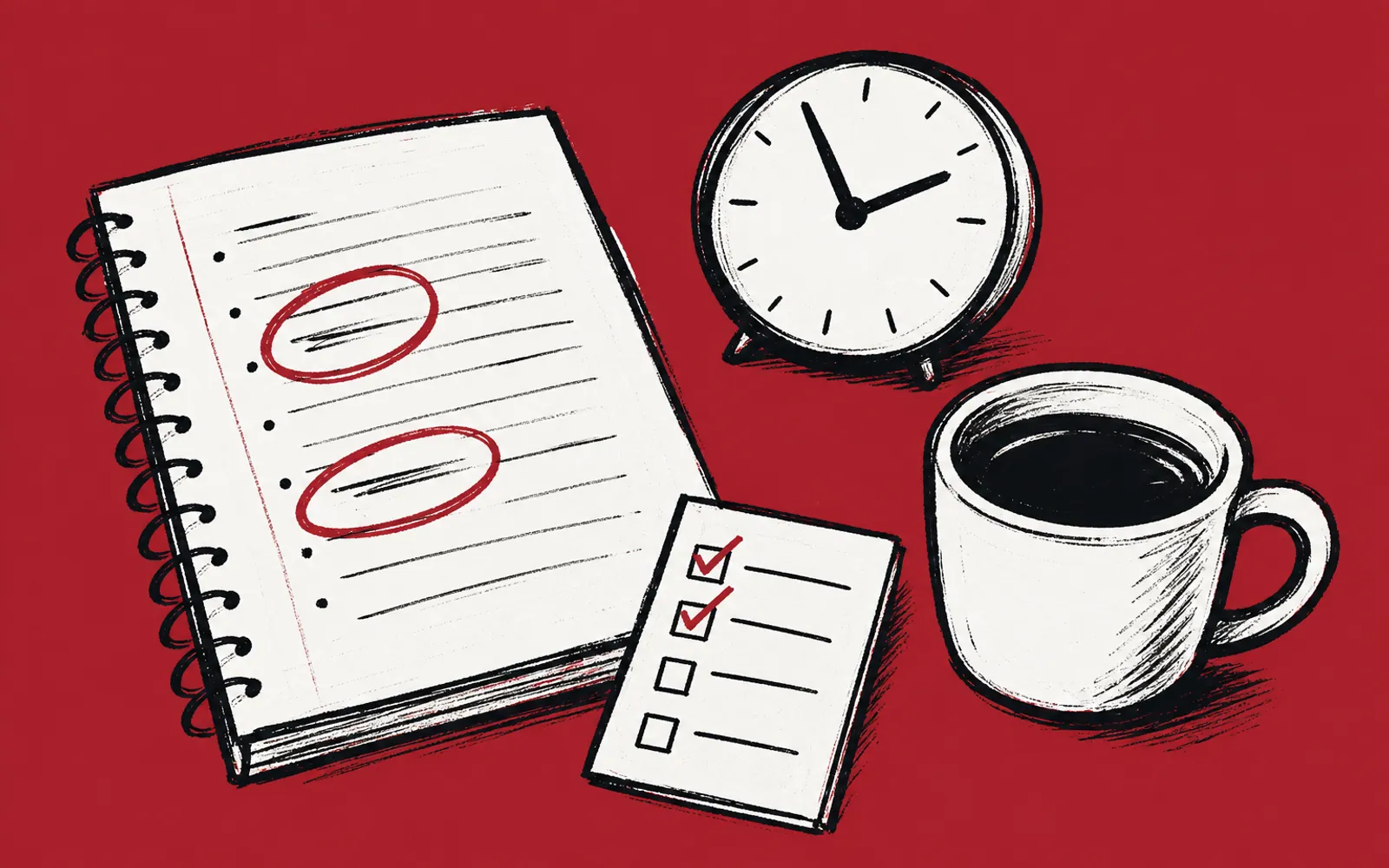
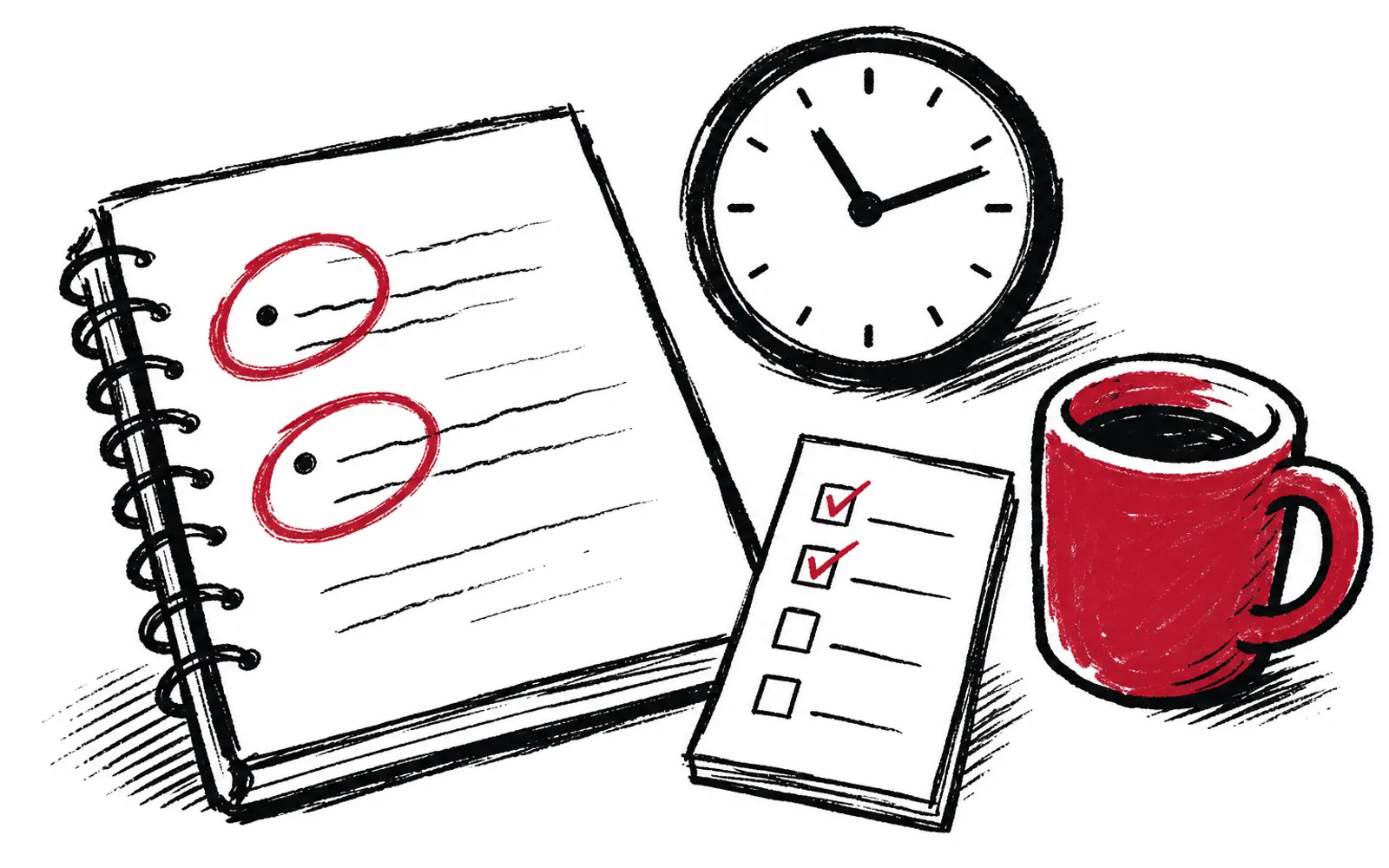
By the end of this guide you will have picked the first two tasks to hand to AI in your own business. You need one week's view of your work and a place to write, whether that is a notebook or a blank document. You need no technical skill. The method below is the same one we use on the free 25-minute fit call: look at two tasks that repeat in your week and pick a first result worth having.
This works for owner-led businesses of any kind, from home services and restaurants to professional practices and real estate. The examples below are yours to adapt. Nothing here requires you to buy anything before you are ready.
List what repeats in your week
- 01Write down every task you did more than once this week
List them as you remember them, in plain words, such as replying to quote requests, writing follow-up emails, or turning meeting notes into next steps.
- 02Mark how often each one came back
Write daily, a few times a week, or weekly beside each task. Repeating work is the raw material; the more it repeats, the more it earns a look.
- 03Judge each task for risk
A low risk task is one where AI produces a draft or a first pass that you review before anything leaves your hands. Cross off anything where a mistake would go straight to a customer, a patient record, or a payment without a check.
- 04Judge each task for a checkable result
A good first task ends in something you can look at and grade in under a minute: a drafted reply, a summarized set of notes, a rewritten description. Cross off anything vague, such as thinking or deciding.
- 05Pick the two tasks that pass both tests
Choose two that repeat often, sit at the draft stage, and produce output you can review. Two is enough for a first month. More than two and none of them gets done well.
- 06Write one before measure for each task
Before you start, note roughly how long each task takes per week and what the finished result looks like today. One or two lines is enough. You cannot see what changed without a starting point.
- 07Try AI on one task this week
Have your AI tool draft the first pass, then review and finish it yourself. Keep your hand on the final version. One task, done properly, tells you more than five started and dropped.
- 08Write down what changed
After a week, note what actually changed: time spent, quality of the output, or what you did with the time you got back. We measure what changed and report honestly, and this is how you do the same for yourself.
Where people get stuck
Everything repeats, so nothing stands out
If your list has twenty items, rank by how often each repeats and how much of your week it eats, then take the top five and apply the risk and result tests from the steps above. You are not choosing the most important task in the business. You are choosing the best first task for AI, which is often a small, repetitive one that sits just below the urgent work.
Nothing feels safe to hand over
Then keep AI at the draft stage. The task does not leave your hands; AI writes a first version and you review, edit, and send. That single rule makes almost any writing task a safe starting point, from customer replies to internal summaries. If a task cannot be reviewed before it goes out, leave it for later.
You cannot tell if it is working
Go back to the before measure you wrote in step six. Compare minutes spent per week and the quality of the finished result against what you noted. If you skipped that step, write the measure now and run the task one more week before judging. We do not guarantee savings or revenue, and you should not expect a guarantee from yourself either. Pick useful work, measure what changed, and be honest about the answer.
What counts as a good first result
A good first result is one you would want again next week without being asked. It is a drafted reply to quote requests that sounds like you, or meeting notes that already contain the follow-up email. It is not a big system, a dashboard, or an automation across your whole business. Bigger builds such as API connections, CRM integrations, and hosted agents are real work, and they get scoped and quoted separately before anything starts. Get one repeating result first and the rest has somewhere to stand.
If you want help doing this, the first step is the free 25-minute fit call on Zoom. We look at two tasks that repeat in your week and pick a first result worth having. Replies come within one business day. Owners usually need one AI subscription such as ChatGPT or Claude, paid directly, and any cost is named before anything is bought. There is also a free AI Starter Prompt Pack with ten prompts, including versions for home services, accountants, and insurance agents, if you want something to try before the call.