Most Houston logistics companies do not need a new operations platform. They need an admin layer, a quiet system that sits on top of the tools they already run and absorbs the email, data entry, and customer messaging that buries the team. The freight expertise is already there. The drag is everything around it.
The hidden cost is in repetitive admin and slow communication. Across small businesses, only about 38 percent of inbound calls get answered by a live person, which leaves roughly 62 percent going to voicemail, and 85 percent of voicemail callers never call back. A logistics customer who has to call for a status update, or an inquiry that hits voicemail, is a sign the admin layer is missing. Research on lead response time is blunt: contact a lead within five minutes and you are 21 times more likely to qualify it than if you wait an hour. Leads reached in under five minutes close at roughly 32 percent, more than double the rate of leads contacted a day later.
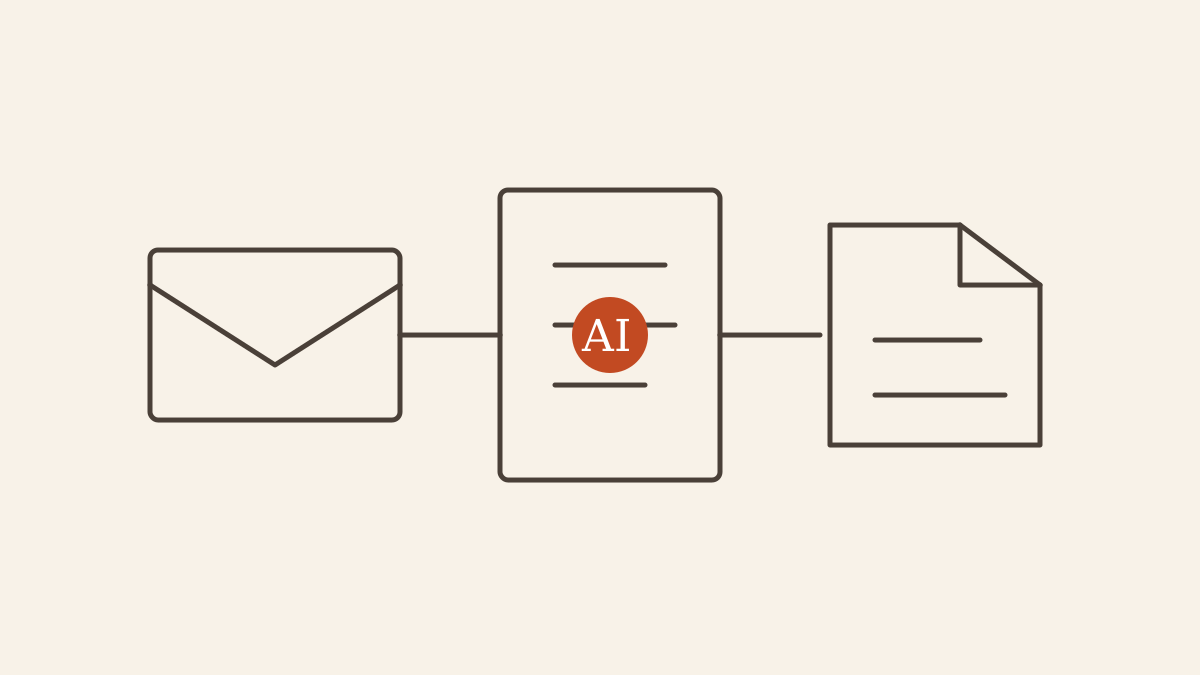
An AI admin layer processes inbound email, extracts shipping details, summarizes exceptions, and drafts customer updates. It does not make routing, pricing, or compliance decisions. The team keeps the operational judgment, AI removes the administrative load that slows everything down.
Where logistics admin overwhelms a team
The admin drag in a logistics operation concentrates in a few high-volume places.
- Email overload. Hundreds of messages a day, with the important exceptions buried among routine updates.
- Manual data extraction. Shipping details pulled from emails and PDFs and re-typed by hand.
- Reactive customer updates. Customers call to ask about shipments because nothing proactive went out.
- The missed inquiry. A new-business call goes to voicemail during a busy stretch and the lead is gone.
None of this is the operational core, the routing, the carrier relationships, the problem-solving. It is the administrative volume that surrounds the core and slows the whole operation, and it is exactly what an AI layer is good at absorbing.
The practical AI system
Four pieces that form an admin layer over the tools the company already uses.
1. Email triage and summary
AI reads the inbound flood, surfaces the exceptions and action items, and summarizes the rest, so the team works from a clean priority list instead of a full inbox.
2. Shipping detail extraction
AI pulls shipping details from emails and documents into a structured format for verification, replacing manual re-keying.
3. Proactive customer updates
AI drafts status and exception updates so customers hear first, reducing the inbound status calls that clog the day.
4. Missed-call coverage
A voice agent answers calls the team cannot, captures the details, and routes urgent and new-business items, so nothing important hits a dead voicemail.
Without an admin layer vs. with one
The admin layer does not change the operation. It removes the drag around it.
| Daily reality | Without AI layer | With AI layer |
|---|---|---|
| Inbound email | Manual triage, things missed | Summarized, exceptions surfaced |
| Shipping data | Re-keyed by hand | Extracted, human verifies |
| Customer updates | Reactive, calls pile up | Proactive, drafted |
| Inquiry calls | Voicemail | Answered, routed |
| Routing and pricing | Team decides | Team decides (unchanged) |
An AI admin layer runs in the tens of dollars per seat per month and sits on top of existing tools rather than replacing them. Against the labor hours saved on email triage and data entry, and the accounts protected by faster, proactive communication, it pays for itself quickly and scales with volume.
Why this matters in Houston
Houston's logistics sector is vast and competitive, and the companies that win are not always the ones with the best software. They are the ones whose teams are not buried in admin. An AI layer lets a lean operation handle more volume, communicate faster, and catch more exceptions than a competitor still doing it all by hand.
The admin layer also compounds into capacity. Every hour the team is not triaging email or re-keying data is an hour spent on customers and operations. That is how a logistics company grows volume without growing headcount at the same rate. The same approach helps logistics and service businesses across the Houston chapter.
Where to keep the human
A good AI system has clear edges. It should draft, summarize, remind, and route. It should not make routing, pricing, or compliance decisions, or send data-driven actions without a person verifying them. The rule we give every business: AI handles the first reply and the follow-up, a person handles the judgment and the relationship.
What most owners get wrong
A few traps show up again and again. They are easy to avoid once you have seen them.
- Replacing the platform instead of layering. The win is an AI layer on top of existing tools, not a risky rip-and-replace. Start where the drag is.
- Trusting extraction without verification. AI extracts, a human confirms anything that drives an action. Speed with a check, not speed alone.
- Letting AI make operational calls. Routing, pricing, and compliance stay with the team. AI handles the admin around them.
- Staying reactive. The biggest win is proactive customer updates. Reactive operations spend the day answering status calls they could have prevented.
A realistic build order
Do not install everything at once. Build in the order that pays back fastest.
- Start with email triage and summary. It attacks the biggest source of admin drag immediately.
- Add shipping detail extraction to remove manual re-keying.
- Layer in proactive customer updates to cut inbound status calls.
- Add missed-call coverage last, to catch urgent and new-business calls.
What good looks like
A company running this well starts each day with a summarized inbox and a priority list, extracts shipping data in seconds with a human verifying, updates customers before they call, and never sends a new-business inquiry to voicemail. The team runs the operation instead of the admin.
The bottom line
Houston logistics companies do not usually need new software. They need an AI admin layer that absorbs email, data entry, and customer messaging, with the team keeping every operational decision, so a lean operation can handle more without drowning in admin.
Texas AI Lab helps Houston logistics and service companies set up these systems. The fastest first step is a short call, or a full AI audit if you want a written plan. You can also see the rest of the local chapter.